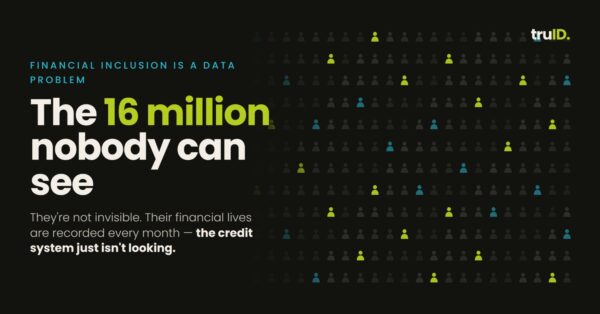
The 16 Million that Traditional Systems Can’t See

In 2024, South Africans submitted 70.8 million applications for credit. Lenders declined 47.5 million of them. Two out of every three, and that ratio has been climbing for most of two decades – at the end of 2007 it was closer to four in ten. Not all of that is a visibility problem. Plenty of […]

Read More »

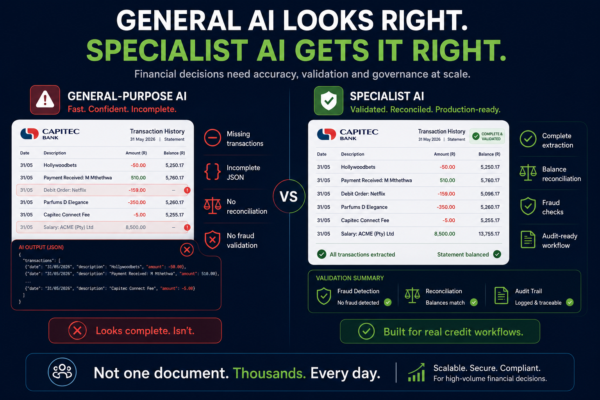
General-Purpose AI vs Specialist AI: Can it be trusted?

The most dangerous AI output in financial services is not one that looks wrong. It is one that looks right, but isn’t. Over the past few months, clients have been asking us a fair question: “Can’t we just upload customer bank statements into ChatGPT or Claude and get the same result?” It’s a fair question. […]

Read More »

Notes from the Open Finance Africa Symposium

truID attended the Open Finance Africa Symposium held in Cape Town – an intimate two-day gathering of around 50 delegates hosted by Cenfri and CGAP. The room brought together regulators, policymakers, financial sector stakeholders, and development partners to evaluate the opportunities, challenges, and implementation pathways for open finance across the African continent. Over two days, […]

Read More »

The Potential to Unlock 21 Million Thin-File South Africans

Financial inclusion in South Africa remains constrained despite widespread bank account ownership. Millions of South Africans can open an account, yet cannot meaningfully use that account to access formal financial services. An estimated 21 million thin-file or credit-invisible consumers, many of them young people, informal earners, or newcomers to the workforce—are excluded from affordable credit, […]

Read More »

The Future of Credit is Transaction Data – And the Shift Has Already Begun

For decades, credit in South Africa has been built almost entirely on 𝗯𝘂𝗿𝗲𝗮𝘂 𝗱𝗮𝘁𝗮. And for decades, that meant millions of good, capable consumers were misunderstood, mispriced, or excluded – not because they were risky, but because lenders could only see a thin sliver of their financial reality. But 𝘁𝗵𝗲 𝗶𝗻𝗱𝘂𝘀𝘁𝗿𝘆 𝗶𝘀 𝘀𝗵𝗶𝗳𝘁𝗶𝗻𝗴. And it’s […]

Read More »

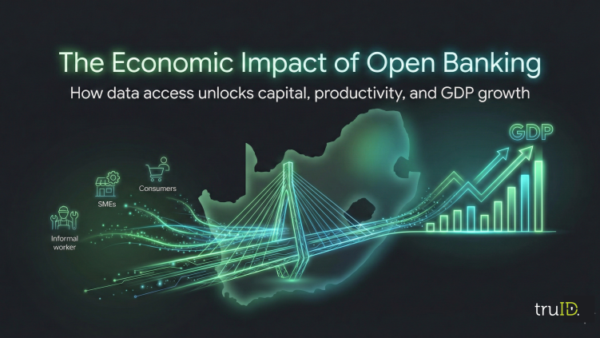
The Economic Impact of Open Banking

A 𝟭𝟬 % shift in financial inclusion could unlock more than 𝙍𝟯𝟬 𝙗𝙞𝙡𝙡𝙞𝙤𝙣 in GDP growth for South Africa. Simply by giving people access to their own financial data. That is the quiet power of open banking. Across South Africa, a large part of the economy operates in plain sight, yet remains financially invisible. Income […]

Read More »

Did You Know You Can Eliminate Almost 100% of Document Manipulation Risk in Credit Origination?

Not fraud in general & Not identity theft… …but document manipulation. SABRIC reports that vehicle asset finance fraud applications more than doubled in 2023, resulting in 𝗥𝟭𝟯𝗯𝗻 in losses. The LexisNexis True Cost of Fraud study shows that for every 𝗥𝟭 lost to fraud, South African businesses incur an average cost of 𝗥𝟯.𝟲𝟰. In unsecured short-term lending, we estimate roughly 𝟮% of […]

Read More »

South Africa Doesn’t Lack Innovation. It Lacks Consistent, Reliable Access.

𝙎𝙤𝙪𝙩𝙝 𝘼𝙛𝙧𝙞𝙘𝙖 𝙙𝙤𝙚𝙨𝙣’𝙩 𝙡𝙖𝙘𝙠 𝙞𝙣𝙣𝙤𝙫𝙖𝙩𝙞𝙤𝙣. 𝙄𝙩 𝙡𝙖𝙘𝙠𝙨 𝙘𝙤𝙣𝙨𝙞𝙨𝙩𝙚𝙣𝙩, 𝙧𝙚𝙡𝙞𝙖𝙗𝙡𝙚 𝙖𝙘𝙘𝙚𝙨𝙨. South Africa has world-class fintech capability and millions who could benefit from better products. Yet innovation depends on one thing: consumer-permissioned data that flows safely, fairly, and predictably. Open Finance hasn’t been slowed by technology, but by differing incentives, evolving regulation, and varied interpretations of […]

Read More »

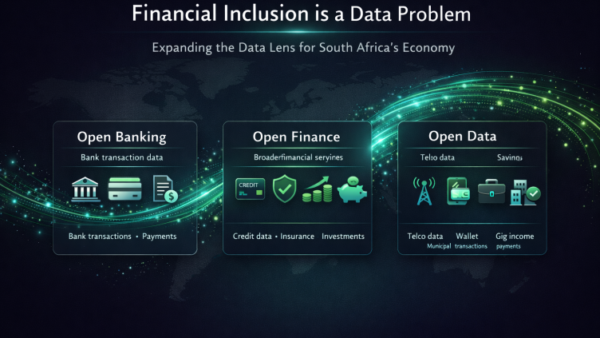
Financial Inclusion in South Africa: A Data Visibility Problem

Did you know that up to 70% of credit applications in South Africa are rejected? Not always because the risk is high, but often because financial visibility is low. Many economically active South Africans earn, spend and build businesses every day, yet remain poorly represented in traditional financial datasets. When the data lens is narrow, […]

Read More »