Branch credit applications are now at least 𝟰× faster –
25-minute processes reduced to under 5-minute end-to-end assessments.
Powered by truID’s AI OCR.
Despite all the talk about APIs and digital channels, the reality is that most credit applications still start with documents:
• Paper bank statements
• Scanned PDFs
• Downloaded eStatements uploaded in-branch
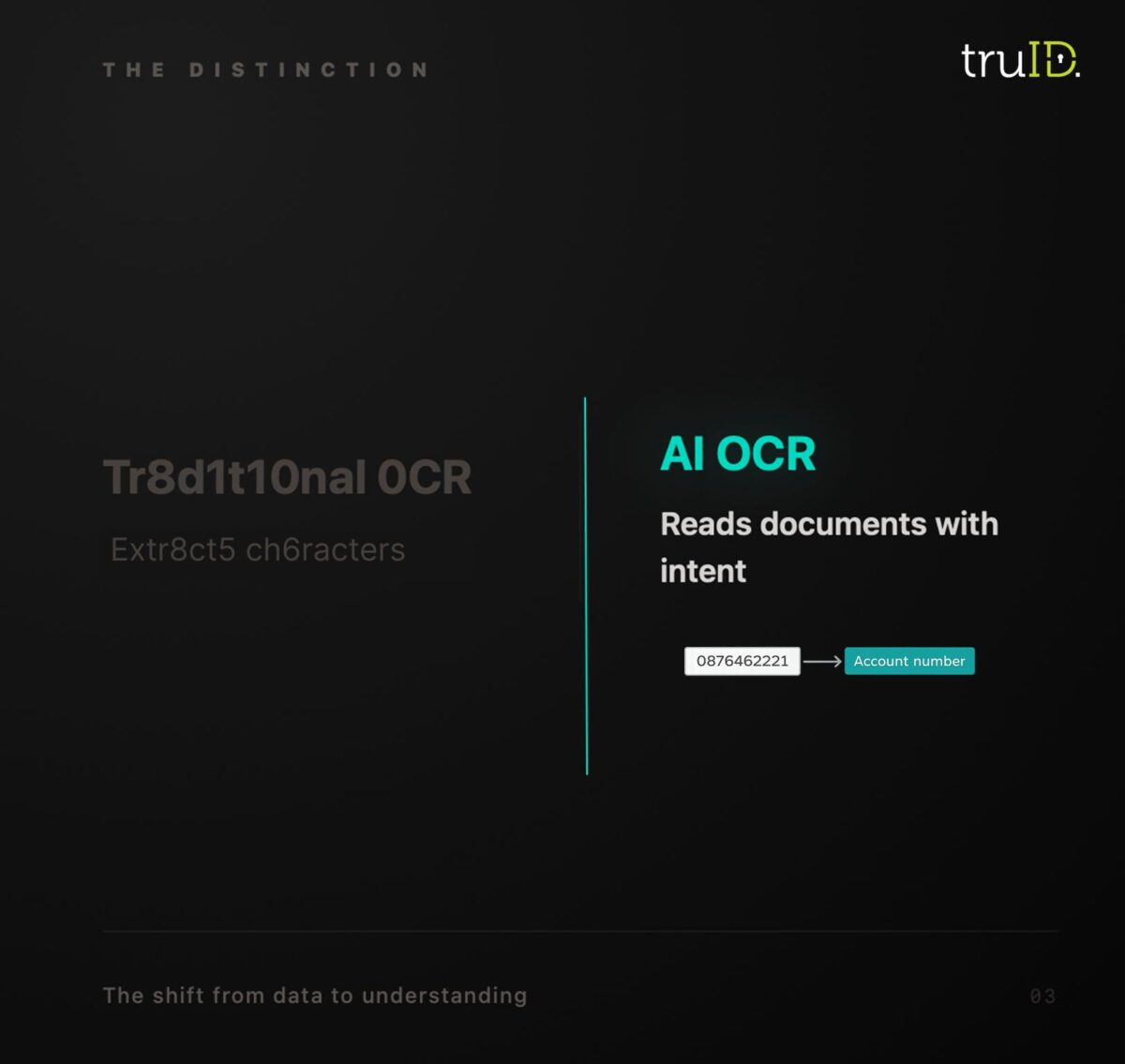
Traditional OCR extracts characters.
AI OCR reads documents with intent.
Reading with intent does not mean categorisation or decisioning.
It means understanding what the data is before deciding what it means.
In practice, reading documents with intent means the system can:
• Identify what each field represents (e.g. account number vs balance)
• Preserve document structure and relationships
• Understand context, position, and continuity
• Output clean, labelled, machine-readable fields
When this layer is missing, systems misbehave:
• Salaries extracted as R1,000,000s break affordability calculations
• Totals and balances misread inflate or suppress income
• Wrong documents pass undetected and break workflows
• Exceptions spike as manual review re-enters automated processes
When documents are read with intent, systems stabilise:
• Values are normalised before affordability checks
• Incorrect or irrelevant documents are flagged early
• Structured data flows cleanly into downstream systems
• Automated decisions stay automated
This is not theory.
This is live, client-implemented infrastructure inside regulated lending environments.
𝗥𝗲𝗹𝗶𝗮𝗯𝗹𝗲 𝗺𝗼𝗱𝗲𝗹𝘀 𝗿𝗲𝗾𝘂𝗶𝗿𝗲 𝗿𝗲𝗹𝗶𝗮𝗯𝗹𝗲 𝗱𝗮𝘁𝗮.
Speed is useful.
Correctness is non-negotiable.
Fintech AIOCR CreditRisk Lending DataQuality DigitalTransformation